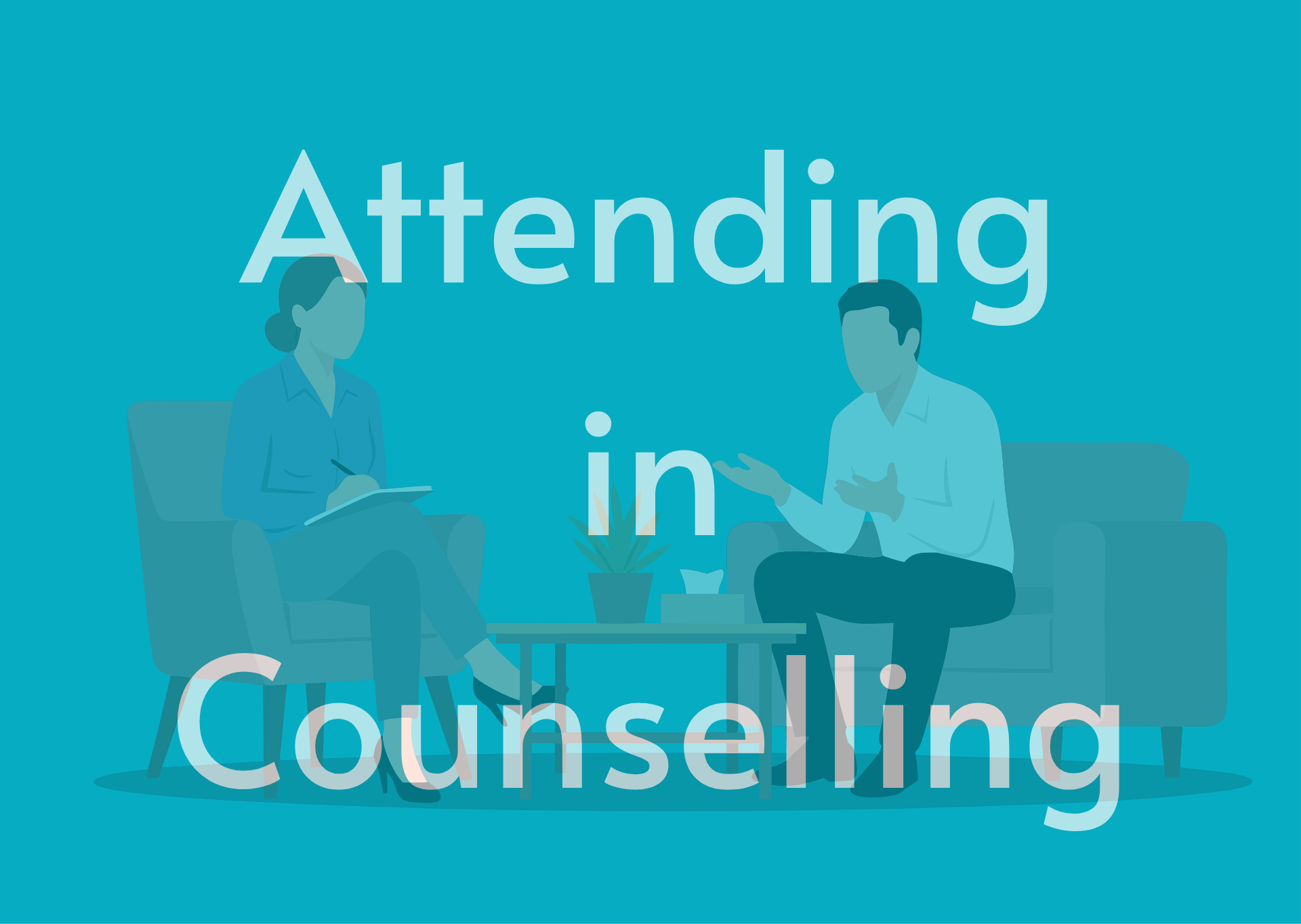
Attending in counselling is a skill that shows you are listening to the client. It combines a range of communications from the counsellor across body language and verbal behaviour that lets the client know they have the counsellor’s full attention. Attending is one of the first skills that trainee counsellors will learn as it is very important that the client feels they are heard and seen in the issues they are presenting in the session. Attending is one of the basic counselling skills that can create a space for the client to open up and talk freely about their concerns.
There are several key elements that make up this skill. In this article, we will explore each of the skills used that make up attending.
Example of attending skills in counselling
This counselling demonstration video by the University of British Columbia highlights how attending might come across in counselling alongside paraphrasing and summarising.
Attending skills
Eye contact
Eye contact is a key feature in attending and shows to the client that they have your full attention.
It is important to remain relaxed and natural in your approach to eye contact. The aim is to communicate you are listening and attentive to the client’s needs. There are times that you might need to look away from the client, which is perfectly fine. Also, be conscious not to stare at the client.
Furthermore, you should also be aware that prolonged eye contact can be disrespectful in some cultures. Some client’s may also struggle with eye contact as well. This falls under working in a client centred approach that meets the need of the individual you are working with.
Body language
You will have heard time and again how much we communicate through body language. It is suggested that 55% of our communication comes from body language, while 38% is through tone of voice and just 7% through our spoken words. Body language has a huge impact on how our words are received an interpretted.
In counselling, you should consider your body language and what that might communicate to the client. Focus on being relaxed in your posture as this is more likely to invite a client to talk about themself.
You might want to try leaning slightly forward when listening to the client as this can communicate to the client that they have your full attention.
Gestures
Alongside body language, gestures can also show you are attending to the client. Gestures can be considered a part of body language. However, they are distinguished as being physical movement used to communicate in a non-verbal way.
As with any attending skill in counselling, you are trying to communicate that the client has your full attention. As such, an example in the counselling space might be nodding to what the client is saying.
You can communicate so much in your body movements. However, be conscious that your gestures match what the client is saying as a head nod, for example, might be misinterpretted under certain circumstances. Likewise to eye contact, you should be conscious of how some gestures could come across in different cultures.
Facial expressions
A counsellor’s facial expressions can communicate a whole range of thoughts, feelings, and emotions to the client. As well, the client will often look to the counsellor for reassurance and validation which can be communicated through facial expressions.
For example, smiling at appropriate times can communicate warmth and trust, helping to build rapport with the client. Conversely, a counsellor could also communicate judgement by frowning or raising their eyebrows.
Facial expressions can show that you are attending to the client’s needs, but be aware of what you are communicating to the client.
How you speak
Choosing what to say to a client falls under other basic counselling skills. However, how you speak can be an element of your attending skills.
When responding to a client, aim to be concise and focus on your use of words. Long interventions may cause confusion and misunderstanding in the client. Using therapeutic jargon could also have the same effect.
Focus on your use of language and tone of voice. Does it meet where the client is at the moment? Using a happy and light tone of voice when the client is in distress might suggest you have not been attending to the client. Instead, a calm and reassuring tone might be more appropriate.
Applying attending skills in counselling
As mentioned in the introduction, attending is often one of the first skills trainee counsellors will learn on their journey. It might feel like a lot to keep track of at the beginning, but the aim is for those skills to become to feel natural over time.
While this may be the main goal, it is important for all counsellors to be aware of how they are communicating their attention towards the client. For trainee counsellors, listening to feedback from an observer is a vital part of your development. For accredited counsellors, attending is something to keep note of during the counselling process and can be discussed with a supervisor.
Leave a Reply